
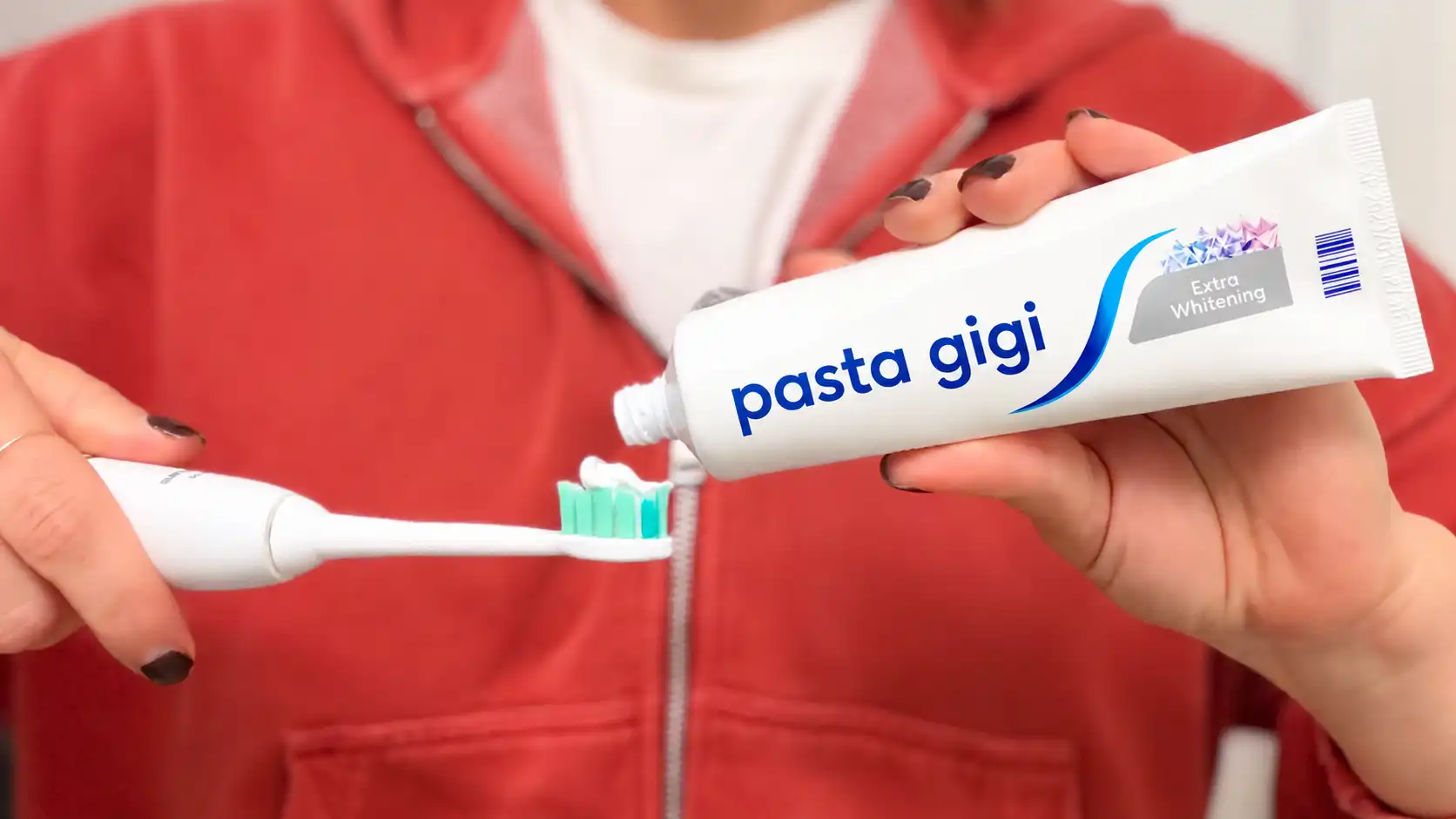
Choosing toothpaste does not have to be complicated. Beyond the brand or additional benefits such as whitening and sensitivity relief, one of the most important things to consider is the fluoride content.
Fluoride helps strengthen tooth enamel, reduce mineral loss caused by acid attacks, and support remineralization during the early stages of tooth decay. This makes fluoride toothpaste an important part of maintaining good oral health.
However, choosing toothpaste is not simply about looking for the highest fluoride concentration. Age, caries risk, the amount of toothpaste used, and a child's ability to spit without swallowing should also be considered.
So, how can you read toothpaste labels and choose the right product?
Why Choose Fluoride Toothpaste?
Fluoride is one of the most important active ingredients for preventing dental caries, commonly known as tooth decay or cavities.
Every day, bacteria in dental plaque can produce acids that cause minerals in tooth enamel to dissolve. This process is known as demineralization. Fluoride helps reduce this process while supporting remineralization, which restores minerals to the tooth structure.
With regular use, fluoride toothpaste helps make tooth enamel more resistant to acid attacks and lowers the risk of tooth decay.
For early-stage tooth decay that has not yet formed a cavity, fluoride can also help stop or slow its progression.
Fluoride Is Not a Substitute for a Filling
Fluoride has its limitations. Once tooth decay has progressed to form a cavity, toothpaste cannot rebuild the tooth structure that has already been lost.
Remineralization works on a microscopic level on the surface of the enamel; it cannot physically close an established cavity. Therefore, teeth with cavities should still be examined by a dentist to determine whether monitoring is appropriate or restorative treatment is needed.
How to Read Toothpaste Labels for Fluoride Content
You do not need to understand every ingredient listed on a toothpaste package. If your primary goal is cavity protection, start by checking the type and concentration of fluoride.
1. Check the Type of Fluoride
Some common fluoride compounds found in toothpaste include:
Sodium Fluoride (NaF): provides fluoride ions that help protect enamel and support remineralization.
Sodium Monofluorophosphate (MFP): a form of fluoride commonly used in toothpaste formulations.
Stannous Fluoride (SnF₂): in addition to helping prevent tooth decay, it may provide additional benefits such as helping control plaque and tooth sensitivity, depending on the product formulation.
All three can be used in fluoride toothpaste. The choice can also depend on additional needs, such as tooth sensitivity or gum health.
2. Check the Fluoride Concentration in PPM
Fluoride concentration is typically listed in ppm (parts per million) on the toothpaste packaging.
For everyday use, toothpaste containing approximately 1,000–1,500 ppm fluoride is commonly used to help prevent tooth decay.
For children, fluoride toothpaste containing at least 1,000 ppm fluoride can generally be used from the time the first tooth erupts. However, the amount of toothpaste used should be adjusted according to age.
Products with higher concentrations, such as 2,800 ppm or 5,000 ppm fluoride, may be recommended for specific needs based on a dentist's assessment and should not be selected independently.
This is why you should not rely only on the words “contains fluoride” on the front of the package. Check the fluoride toothpaste concentration in the ingredients or active ingredient information.
Understanding the fluoride toothpaste concentration can help you determine whether a product is appropriate for everyday use or whether it may require professional guidance.
Fluoride Toothpaste for Children: How Much Toothpaste Should They Use?
For children, fluoride concentration is not the only factor to consider. The amount of toothpaste used is also important because young children may not yet be able to spit properly and may accidentally swallow toothpaste.
Brushing should begin as soon as the first tooth erupts.
Age | Toothpaste Amount | Fluoride Concentration | Key Consideration |
First tooth–under 3 years | No more than a rice-grain-sized smear | At least 1,000 ppm | Parents or caregivers should help with brushing and supervise to prevent excessive swallowing. |
3–6 years | Pea-sized amount | Generally 1,000–1,500 ppm | Supervise brushing and teach the child to spit out the remaining toothpaste. |
Over 6 years & teenagers | According to individual needs and product instructions | Generally 1,000–1,500 ppm | Make sure the child can brush and spit properly. |
Adults | According to product instructions | Generally 1,000–1,500 ppm | Higher concentrations may be considered based on individual caries risk. |
Toothpaste Amount by Age
For children under 3 years, use a toothpaste amount of no more than a thin rice-grain-sized smear.
For children aged 3–6 years, use no more than a pea-sized amount. Parents should continue supervising to make sure the appropriate amount is used and that the toothpaste is not accidentally swallowed.
The toothpaste amount by age is important, but it is only one part of good oral hygiene. Proper brushing technique and brushing twice a day are equally important.
Children with a high risk of tooth decay may require a different preventive strategy. For this reason, a dentist's recommendation should remain the primary consideration.
Does a Whitening Claim Mean Better Toothpaste?
Not necessarily.
Toothpaste may offer additional benefits, such as:
helping reduce tooth sensitivity,
helping control surface stains,
providing a whitening effect,
helping control plaque or gum problems.
However, these claims do not automatically mean that a product provides adequate protection against tooth decay.
If your primary goal is cavity prevention, check the fluoride content first. Additional benefits can then be considered based on your individual needs.
How to Use Fluoride Toothpaste for Optimal Benefits
Choosing the right fluoride toothpaste is only the first step. How you use it also affects the benefits you receive.
Brush Twice a Day
Brush your teeth twice a day, including at night before bed. Make sure all tooth surfaces are cleaned using an effective brushing technique.
For children, parents or caregivers should help or supervise brushing until the child has developed adequate brushing and spitting skills.
Spit, Don't Rinse Excessively
After brushing, spit out the remaining toothpaste. Avoid rinsing repeatedly or with a large amount of water, as this can reduce the amount of fluoride remaining around the teeth.
For young children, the priority is to use the appropriate toothpaste amount and supervise them to prevent excessive swallowing.
Is Fluoride-Free Toothpaste Equivalent?
Fluoride-free toothpaste can still help clean tooth surfaces mechanically through brushing. However, it does not provide the benefits of fluoride as an active ingredient for preventing and controlling tooth decay.
Therefore, if the primary goal is cavity protection, fluoride toothpaste is an important option to consider as part of a daily oral care routine.
Specific needs, including reasons for using or avoiding certain products, should be discussed with a dentist.
When Should You See a Dentist?
Fluoride needs are not the same for everyone. Consult a dentist if:
Your child experiences recurring cavities.
There are multiple cavities or tooth decay that continues to progress.
Your child has a high risk of tooth decay.
There are medical conditions that affect oral health.
You are using additional fluoride products.
You are unsure which product to choose or what fluoride concentration is appropriate.
A dentist can assess your dental condition and caries risk before determining whether additional fluoride strategies or higher-concentration products are needed.
Dental Consultation at Onyx Dental Center
Knowing how to read toothpaste labels can help you make a more informed choice. However, the right fluoride needs can vary depending on your dental condition and individual caries risk.
At Onyx Dental Center, a dental examination can help assess your oral health before determining recommendations that are appropriate for your individual needs.
If you are still unsure about how to read toothpaste labels, choosing fluoride toothpaste, or selecting the right fluoride concentration for children, consult a dentist directly.
Contact Onyx Dental Center via its official WhatsApp channel for information about available dentists and appointment schedules.
Toothpaste Selection Checklist
Before buying toothpaste, make sure you have:
☐ Checked whether the product contains fluoride
☐ Checked the type and concentration of fluoride in ppm
☐ Chosen the appropriate toothpaste amount by age
☐ Avoided choosing a product based solely on whitening claims or flavor
☐ Considered additional needs such as tooth sensitivity or gum health
☐ Consulted a dentist if your child has a high risk of tooth decay
☐ Used toothpaste consistently and brushed twice a day
Conclusion
Fluoride toothpaste is an important part of preventing tooth decay. When choosing a product, check the type and concentration of fluoride, then consider age and individual caries risk.
For children, pay close attention to the toothpaste amount by age. From the eruption of the first tooth until under 3 years old, use no more than a rice-grain-sized smear. For children aged 3–6 years, use no more than a pea-sized amount and supervise them while brushing.
Remember, fluoride can help prevent and control tooth decay at certain stages, but it cannot replace treatment for an established cavity.
If you are unsure about choosing fluoride toothpaste for children or determining the appropriate fluoride needs for yourself or your child, consulting a dentist can help ensure that the choice is appropriate for the individual's dental condition.
Read More:
Pasta Gigi yang Mengandung Fluoride: Cara Membaca Label dan Memilih Sesuai Usia
Electric Toothbrush or Manual: How to Choose for Your Teeth and Gums
References
Cocco, F., Salerno, C., Wierichs, R. J., Wolf, T. G., Arghittu, A., Cagetti, M. G., & Campus, G. (2024). Hydroxyapatite-fluoride toothpastes on caries activity: A triple-blind randomized clinical trial. International Dental Journal. https://doi.org/10.1016/j.identj.2024.09.037
Kayani, S. G., Qureshi, R., Imtiaz, M., Bajwa, S. J., Khan, M. A., & Farooq, M. (2021). Effectiveness of daily fluoride toothpaste use in reducing tooth decay and maintaining oral health: A population-based study. Journal of Population Therapeutics and Clinical Pharmacology, 28(2), 566–572. https://doi.org/10.53555/96wjr798
Yeh, C.-H., Wang, Y.-L., Vo, T. T. T., Lee, Y.-C., & Lee, I.-T. (2025). Fluoride in Dental Caries Prevention and Treatment: Mechanisms, Clinical Evidence, and Public Health Perspectives. Healthcare, 13(17), 2246. https://doi.org/10.3390/healthcare13172246