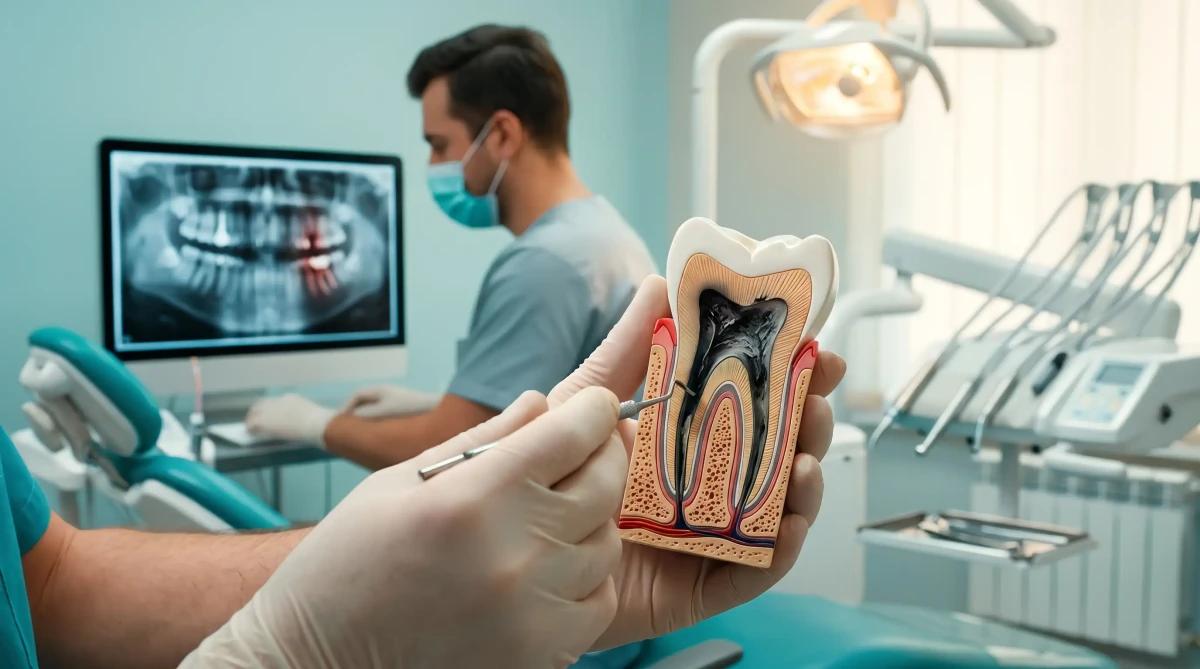
What Is a Dead Tooth?
A dead tooth is a common term used to describe a tooth with pulp necrosis. The dental pulp is the soft tissue inside the tooth that contains blood vessels, nerves, and connective tissue. It plays an important role in tooth development and sensory response.
When the pulp becomes severely damaged or infected, its tissue may lose vitality and eventually die. This condition is known as pulp necrosis. A tooth with necrotic pulp is also commonly referred to as a non-vital tooth. However, the term non-vital tooth can also describe a tooth that has undergone root canal treatment, as the pulp tissue has been removed during the procedure.
Pulp Necrosis and a Non-Vital Tooth: Are They the Same?
Although these terms are often used interchangeably, they do not always describe the same clinical condition.
Term | Explanation |
|---|---|
Pulp necrosis | The death of dental pulp tissue, which may occur partially or completely |
Dead tooth | A common term for a tooth with necrotic pulp |
Non-vital tooth | A tooth that no longer has a vital pulp, including a tooth with pulp necrosis or one that has undergone root canal treatment |
Pulp necrosis can occur when the pulp is damaged beyond its ability to recover. In certain cases, the dead tissue may also undergo bacterial decomposition, a condition commonly referred to as pulp gangrene.
However, not every case of pulp necrosis involves pulp gangrene.
What Causes a Dead Tooth?
Several conditions can damage the dental pulp and eventually lead to pulp necrosis. Some of the most common causes include:
Deep tooth decay: When cavities progress deeper into the tooth, bacteria may reach the pulp and cause inflammation or infection.
Dental trauma: A strong impact, accident, or injury can damage the blood supply to the pulp, potentially causing the tissue to lose vitality.
Repeated dental procedures: Multiple or extensive dental treatments may place stress on the pulp, particularly when the tooth has already experienced significant damage.
Cracks or fractures: A crack or fracture may allow bacteria to enter the inner structures of the tooth and affect the pulp.
The underlying cause and extent of damage can vary from one tooth to another. Therefore, a dental examination is necessary to determine the condition accurately.
Dead Tooth Symptoms You Should Recognize
The symptoms of a dead tooth can vary depending on the cause, extent of pulp damage, and condition of the surrounding tissues.
Some teeth with pulp necrosis may cause noticeable discomfort, while others may not produce obvious symptoms.
Common signs associated with a dead tooth include:
Tooth discoloration: The affected tooth may gradually become darker, appearing yellowish, gray, or brown compared with the surrounding teeth.
Pain or discomfort: Some patients may experience spontaneous pain, throbbing, or discomfort when biting or chewing, particularly when the surrounding tissues become inflamed.
Swelling around the tooth: Inflammation or infection around the root may cause swelling in the surrounding gums.
A history of dental trauma or deep decay: Previous injuries, extensive cavities, or recurring dental problems may increase the likelihood of pulp damage.
However, these symptoms do not automatically indicate pulp necrosis. Tooth discoloration, pain, or swelling can also be associated with other dental conditions.
Why Can a Dead Tooth Stop Hurting?
One question patients often ask is why a tooth that previously caused severe pain may suddenly stop hurting.
When the pulp tissue becomes necrotic, its nerve response may be lost. As a result, the tooth may no longer respond to certain stimuli, and the pain that was previously felt may decrease or disappear.
However, the absence of pain does not necessarily mean the tooth has healed.
Bacteria and infection may still be present within the root canal system and can affect the tissues surrounding the root. In some cases, this may lead to inflammation or infection around the root tip.
That is why a tooth that no longer hurts should still be evaluated if there is a history of severe pain, deep decay, or dental trauma.
How Is Pulp Necrosis Diagnosed?
A dead tooth cannot be diagnosed based on appearance or symptoms alone. Dentists need to combine the patient's dental history, clinical examination, and supporting tests to assess the condition of the pulp.
Several examinations may be performed, including:
1. Dental history and clinical examination: The dentist will ask about previous toothaches, dental injuries, cavities, and any changes in symptoms. The tooth and surrounding tissues will also be examined.
2. Pulp sensibility tests: Cold tests or electric pulp testing (EPT) may be used to assess the tooth's neural response to certain stimuli. These tests do not directly measure blood flow within the pulp, so their results must be interpreted alongside other clinical findings.
3. Radiographic examination: Dental X-rays may help identify changes around the root tip, the extent of tooth damage, or other findings that cannot be seen during a visual examination.
No single test is always sufficient to confirm pulp necrosis. The dentist needs to interpret the results together with the patient's symptoms and other clinical findings before making a diagnosis.
Treatment Options for a Dead Tooth
A dead tooth does not automatically need to be extracted. Depending on the extent of damage, the condition of the surrounding tissues, and whether the tooth can still be restored, several treatment options may be considered.
1. Root Canal Treatment for a Dead Tooth
Root canal treatment for a dead tooth is one of the main options for preserving a tooth with necrotic pulp, provided that the tooth is still restorable.
During the procedure, the dentist will:
- Create an opening to access the pulp chamber and root canals.
- Remove the infected or necrotic pulp tissue.
- Clean and disinfect the root canal system.
- Fill and seal the prepared root canals to help prevent further contamination.
- Restore the tooth with an appropriate filling or dental crown, depending on the remaining tooth structure.
The purpose of root canal treatment is to remove the diseased tissue, address the infection within the root canal system, and preserve the natural tooth whenever possible.
2. Tooth Extraction
In some cases, a tooth may be too damaged to be restored. For example, extensive structural damage, certain types of root fractures, or poor supporting tissue conditions may affect the long-term prognosis.
When the tooth cannot be predictably preserved, extraction may be considered. The dentist will assess the condition and discuss suitable options for replacing the missing tooth when necessary.
The most appropriate treatment depends on a comprehensive examination rather than the presence of pulp necrosis alone.
When Should You See a Dentist?
Do not wait for pain to return before having a suspicious tooth examined. Consider scheduling a dental appointment if you notice:
- A tooth that gradually becomes darker than the surrounding teeth.
- A history of severe or recurring toothache, even if the pain has subsided.
- Swelling or discomfort around a particular tooth.
- Pain when biting or chewing.
- A tooth that has experienced significant trauma or deep decay.
Seek prompt dental evaluation if these symptoms are accompanied by worsening pain, swelling, or fever. Rapidly spreading swelling, difficulty swallowing, or difficulty breathing requires emergency medical attention.
Early evaluation helps the dentist identify the underlying problem and determine whether the natural tooth can still be preserved.
Consultation at Onyx Dental Center
A tooth that changes color or suddenly stops hurting may still require professional evaluation. These changes should not be ignored, particularly if the tooth has a history of deep decay, injury, or recurring pain.
At Onyx Dental Center, a comprehensive examination helps assess the condition of the affected tooth, the surrounding tissues, and the available treatment options. If you suspect pulp necrosis or notice changes in your tooth, schedule a consultation with our dental team in Karawaci, Tangerang, to receive an appropriate diagnosis and treatment plan.
Conclusion
A dead tooth, commonly associated with pulp necrosis, occurs when the dental pulp loses its vitality. Although it may cause discoloration, pain, or swelling, some cases do not produce noticeable symptoms.
The absence of pain does not necessarily indicate recovery, as infection may still affect the tissues surrounding the root. A combination of clinical examination, pulp sensibility tests, and radiographic assessment is needed to determine the condition accurately.
Fortunately, a dead tooth does not always need to be extracted. If the tooth is still restorable, root canal treatment may help address the problem while preserving the natural tooth. The right diagnosis is essential to determine the most appropriate treatment and protect your long-term oral health.
References
Abdulwahab, M. A., Alqahtani, M. S., Alshammari, A. A., & Jiffri, E. (2021). Etiologies, risk factors and outcomes of dental pulp necrosis. International Journal of Community Medicine and Public Health, 9(1), 348–353. DOI: 10.18203/2394-6040.ijcmph20214793
Elsevier. (n.d.). Pulp necrosis. ScienceDirect Topics. Accessed November 15, 2026.
Plascencia, H., et al. (2017). Management of permanent teeth with necrotic pulps and open apices according to the stage of root development. Journal of Clinical and Experimental Dentistry, 9(11), e1329–e1339. DOI: 10.4317/jced.54287